For this task we did a focus group for tasting cookies. Whilst doing this task we realised that carrying out a focus group for these questions were good because it meant that we were able to do it a lot quicker than if we were to fill in a survey and because we were speaking it was more detailed because we were just saying what we initially thought. I think by doing a focus group we were able to state our opinions more because are I stated earlier we could just say what we thought. However there were some negatives of doing a focus group, for example people could not clearly state their opinion if they are just speaking, they may change their mind and waffle on, it might be difficult to understand and hear the voices in the audio clip. Another con is that it might take a wile for the researcher to collect all of the information if they have to listen to each audio clip.
Before doing this task I didn't know much about focus groups and what data they were used to collect however now I understand in much more detail and I thought it was a lot more informal and interesting to do.
Appearance?
Does it make you interested in politics?
Does it grab your attention?
Style?
This is my final poster. After printing it out in A3 I have realised that I have made a couple of mistakes, for example the triangles in the middle are wonky which could make the poster look untidy. Some of the edges are not straight which I didn’t realise before printing it. If I were to do this task again I would make sure I zoomed in a lot to make the edges and triangles to look neat.
This is the focus group that took place, each of the students at Bath College took time to look at the four posters and analyse them. You will see that from this audio clip you can hear the students saying what they like and what they didn't like about the posters. They also discussed which ones were more effective and why.
Tuesday, 9 December 2014
Monday, 1 December 2014
Flash
During our interactive lesson we used flash to make a short animation. I decided to make an animation of a tree, I didn't think it was too difficult bearing in mind I have not used the software before. However I am not very good at drawing so I struggled when drawing the tree with the brush tool. In order to make it an animation after drawing each part of the tree I clicked on insert then I went onto timeline, after that I selected keyframe. When I have selected that I carried on drawing and did this after each step.
I then repeated the same steps for a Christmas related gif. This one involved more steps however it was a lot easier because I knew the steps and I knew what to do.
The week after I tried outcome more gifs, the one below was a little more difficult than the others and it took more time to do however I got the hang of it eventually. I started off by drawing a ball on the first keyframe, I then right clicked on the 60 then moved the shape to the other side of the frame and went to the middle of that section to select create shape tween. Next I inserted a key frame at 120 which was the end of my animation, after that I right clicked in the middle of that section and selected create shape tween again and I changed the shape slightly. This step made the shape change as it was moving across the frame.
Thursday, 27 November 2014
Election Connection Research Report
Research is the investigation into sources in order to find new knowledge, finding out new research allows us to educate ourselves on certain topics. There are many different types of research, for example quantitative and qualitative data. Quantitative data is a more logical type of data, it gives a measure of what people think, you can collect a large amount of quantitative that can organised for analysis. To collect this, questionnaires and surveys are mostly used in order to collect specific answers, this sort of data can be flexible as it can be carried out in many different ways, including online, post and possibly over the phone. However qualitative data is based around opinions, what people think and how they feel. Qualitative data can be changed and changed or measured, unlike quantitative data. This type of data can be led by discussion which is a lot more casual.
Primary data is new data that can be found out by yourself, it is used to answer specific problems and overcome issues. This can be found out by doing questionnaires and surveys to find out the opinions. Secondary data is research that has already been carried out by someone else, it involves a collection of existing research, for example finding information online, in books, on TV etc. Secondary research allows us to get a better understanding of certain subjects, you could say it is an educational type of research.
Market research is finding out information in order to know how successful a particular product will be. As part of this you will need to find out what the consumers needs and preferences are. Using a focus group is a good way of carrying out market research, it allows the potential consumers to have an input into the product. Questionnaires and surveys can be used, similarly to focus groups we can find out what the customers are expecting of the product. Audience research is gathering information about the audiences attitudes, preferences, interest, knowledge etc. The reason this is carried out is so we can get a better understanding of the target audience, it would be pointless making something that won’t appeal to the right people. Knowing the people you want to target the product at will make it have a more successful turnout. Questionnaires are good in audience research because they are quick and easy to do and they allow us to collect a lot of information about the target audience. Interviews are good because to public can describe what they would like to see, what works and what doesn’t. Online reviews and ratings are good because people can judge the product and express how to improve it.
Production research allows us to identify what resources are needed to launch a final product, and whether the product will be suitable and profitable to the market. It will give us an idea of what factors will affect the production of the product. The controllable factors will be, pricing and promotion and uncontrollable factors will be technology, competition, economic changes. Examples of production research are pre-production and post-production because they both give the producer knowledge of important aspects that need to be thought of whilst the product is in production.
To conclude I think all types of research because it allows us to gain knowledge and a better understanding of what we want the end product to be like, who it will appeal to and how well it will do on the market. We will also have an understanding of the costs and of the income and how to organise to create best possible financial results from release date.
Saturday, 22 November 2014
Linear And Non Linear
Linear Narrative
In a linear narrative can be divided into 3 or 4 sections, act one is where all the main characters and their basic situations are introduced, it explores the characters background and personalities. A problem is normally introduced in the first section which leads the storyline forward. The second act is the bulk of the story. There is normally a problem being introduced which changes and alters the storyline, as an audience we try and solve this problems ourselves. After that there is a resolution, leading to the end of the film. This is where the problem in the story boils over and the characters have confronted and solved the issue. This allows the elements of the story to come together leading to the ending.
An example of a linear narrative film is The Exorcist, the first section of the film is where the main characters are introduced and we learn a lot about their lives. In the second part, the main character becomes possessed by a demon which is clearly the problem, their is no real explanation as to why this happened. After this there is the last part of the film which is the exorcism which is the main part of the story which it has been leading up to.
Non Linear Narrative
In contrast, a non linear is a disjointed structure that often starts in the middle or at the conflict/problem and makes it's way to the beginning of the film. Another non linear form is including flashbacks or flash forwards to tell the story, this is interesting to the viewer because it keeps them on their toes and makes the film interactive with the audience. This unconventional way of presenting events challenge the viewer’s memory in the way that they can only understand the plot by making cause-and-effect connections between the scenes. This draws in the audience and makes the film more interesting and exciting.
An example of a non linear structure is Pulp Fiction, it structures around three interrelated storylines: Vincent Vega, Butch Coolidge and Jules Winnfield. Vincent Vega is the lead of the first story and is a hit man for Marcellus Wallace. The third story has Vincent’s partner Jules Winnfield in the lead. Each story focuses on a different series of incidents but they are all connected together.
Monday, 17 November 2014
Colour Association
Different colours can show different feelings and emotions, a certain colour can demonstrate how you are being perceived. For example I would say red has a few connotations, one is that red shows signs of danger however it can also be used to convey romance and love. Blue is seen as a relaxing colour, it can make people feel comfortable in their surroundings. Many themes of spa's are blue. Colours such as yellow, green and pink can be very bright and for me they depict happiness and a light hearted nature. The colour green is the colour of nature, I would also link it to recycling and making the world more eco-friendly. Colours such as grey and white are quite plain which in my opinion have no attached feelings or meanings because they can be shown as 'dull'.
Here I have arranged some coloured pens into the style of a colour wheel, by doing this I have gained a better understanding of how the colours look when they are put next to each other. For example, colours opposite each other are complimentary and some are contrasting due to their positioning in the colour wheel.
This is a collage of pictures I took last week when I was walking around Bath, I took pictures of objects ranging from clothes to doors. I have arranged this in the form of the colour wheel.
Primary Colours are those that are formed by mixing any other colours, some say they are pure colours. Secondary are formed by mixing two or more primary colours together and tertially by mixing two or more secondary colours.
Tetradic Colour Scheme
This colour scheme uses four colours arranged into two complementary colour pairs. This scheme is hard to harmonise; if all four colours are use in equal amounts, the scheme may look unbalanced, so you should choose a colour to be dominant or subdue the colours.
Triadic Colour Scheme
This colour scheme uses three colours equally spaced around the colour wheel. It offers strong visual contrast while retaining balance, and colours richness. The triadic scheme is not is not as contrasting as the complementary scheme, but it looks more balanced.
Complementary Color Scheme
This is made of two colours that are opposite each other on the colour wheel, the complementary scheme is intrinsically high-contrast and draws maximum attention. Using one colour for the background and its complementary colour to highlight important elements, you will get colour dominance combined with sharp colour contrast.
Analogous Colour Scheme
Analogous colour are colours that are in close proximity of each to each other on the colour wheel that share similar hue and saturation. The graphic example below shows red and two analogous colours of red violet and red orange. Analogous colours are most often used to achieve proper colour harmony.
Sunday, 16 November 2014
Art Forms
Postmodern
PostmodernI in general, included movements such as Intermedia, Installation art, Conceptual Art and Multimedia, particularly involving video are described as postmodern. Dates that have been proposed as marking the beginning of the postmodern movement include 1914 in Europe and 1962 or 1968 in the United States. Postmodern art tends to deconstruct traditional narratives of race, gender, nationality and family.
Futurism Art
Futurism was an artistic and social movement that originated in Italy in the early 20th century. It emphasized and glorified themes associated with contemporary concepts of the future, including speed, technology, youth and violence. It was largely an Italian phenomenon, though there were parallel movements in Russia, England and elsewhere. The Futurists practised in every medium of art, includingpainting, sculpture, ceramics, graphic design, industrial design, interior design, urban design, theatre, film, fashion, textiles,literature, music, architecture and even gastronomy.
Art Nouveau

Art Nouveau is considered a "total" art style, embracing architecture, graphic art, interior design, and most of the decorative arts, including jewellery, furniture, textiles, household silver and other utensils and lighting, as well as the fine arts. According to the philosophy of the style, art should be a way of life. In the 19th Century, it was inspired by natural forms and structures, not only in flowers and plants, but also in curved lines.
Swiss Style

Swiss Style, is a graphic design style developed in Switzerland in the 1950s that emphasizes cleanliness, readability and objectivity. The style is also associated with a preference for photography in place of illustrations or drawings. Fonts chosen for the text are sans serif. Many early pioneers of the movement believing that design is a “socially useful and important activity... the designers define their roles not as artists but as objective conduites for spreading important information between components of society.”
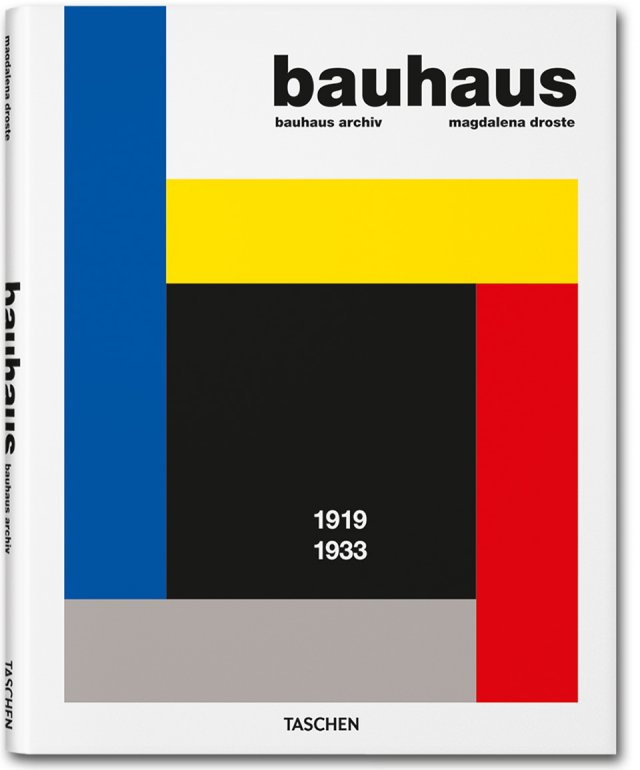
Bauhaus
Bauhaus, was an art school in Germany that combined crafts and the fine arts, and was famous for the approach to design that it publicised and taught. It operated from 1919 to 1933. The Bauhaus was first founded by Walter Gropius. The school existed in three German cities: Weimar from 1919 to 1925, Dessau from 1925 to 1932 and Berlin from 1932 to 1933. Changes of venue and leadership resulted in a constant shifting of focus, technique, instructors, and politics.
Subscribe to:
Posts (Atom)